Call queue system that keeps callers informed
When every agent is busy, callers want to know where they stand. Halo's call queue system tells them their place in line, keeps VIP callers first and offers a callback when the wait gets long.
Call queues
What you get
A call queue system decides who answers next and what the caller hears while they wait. In Halo, each queue is set up once by your admin and then runs on its own.
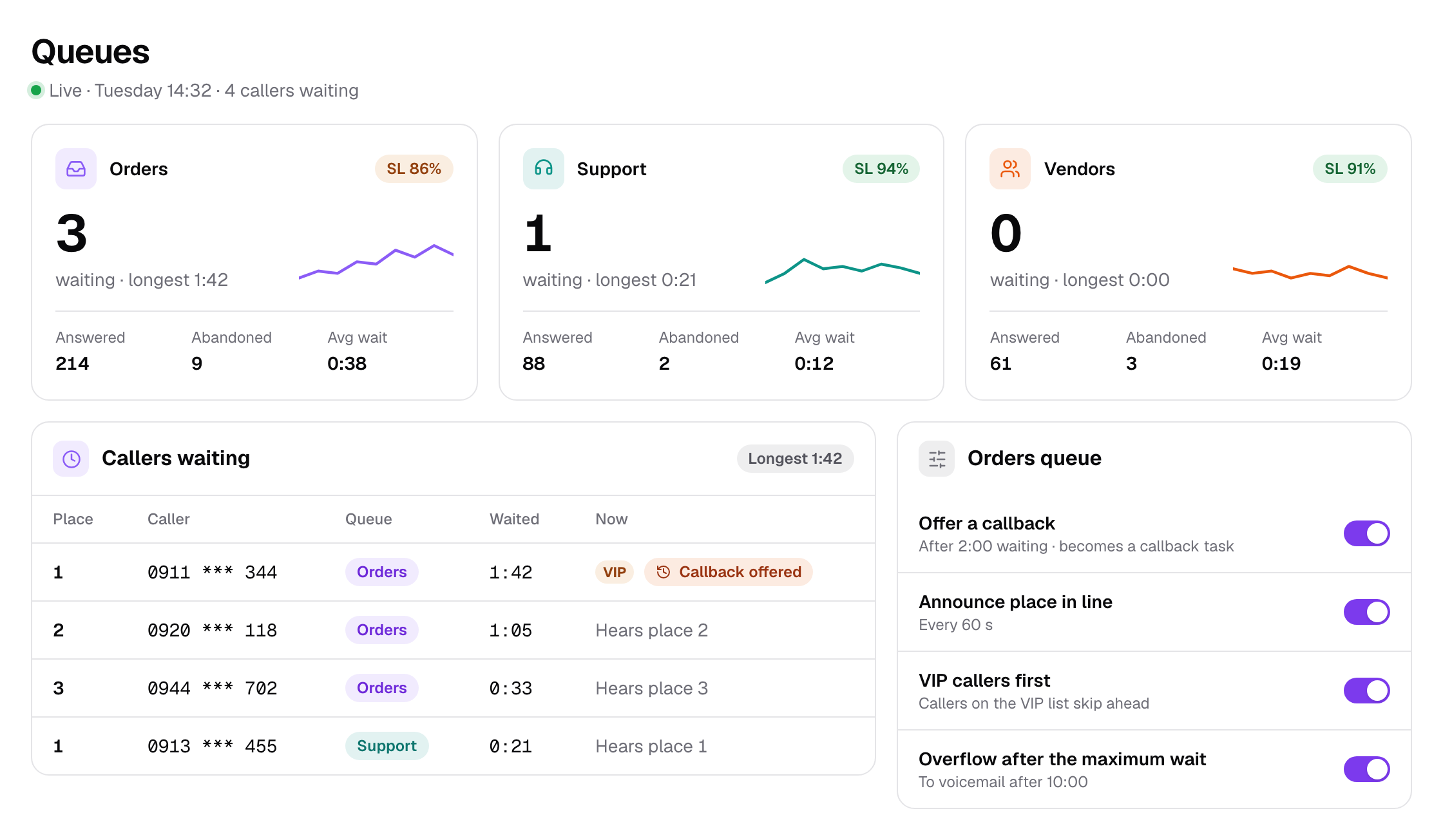
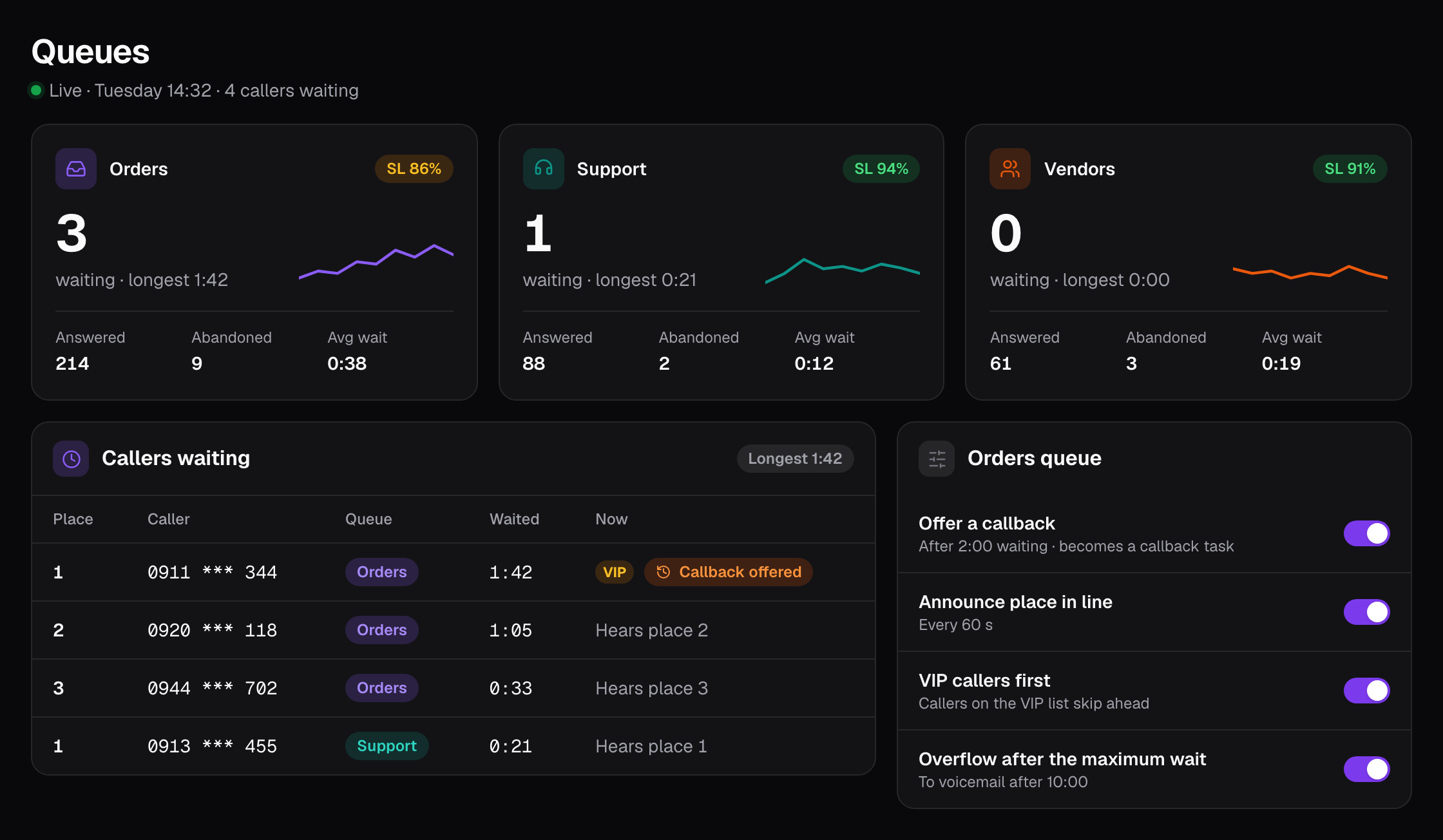
Place in line, said out loud
Callers hear their position in the queue, every 60 seconds by default, so nobody waits in silence.
Hold music you choose
Each queue plays its own hold music. Built-in queue sounds can be replaced with your own recordings in Amharic.
VIP callers first
Callers you mark as VIP move ahead of the others in a busy queue.
A callback instead of a long wait
Queues can offer a callback. The request becomes a callback task on the shared list, and it closes itself once the customer is reached.
Overflow after the longest wait
After the maximum wait, callers move on to an overflow. By default that is voicemail, which also becomes a callback task.
Back to the front if a browser closes
If an agent’s browser closes during a queue call, the caller goes back to the front of the queue within seconds.
What a caller hears, step by step
- The voice menu sends the call to a queueA menu choice such as “Orders” or “Support” places the caller in that queue.
- Hold music and their place in lineEvery 60 seconds by default, the caller hears where they stand.
- A callback, or the overflowThey can ask for a callback, and after the maximum wait the call moves to voicemail by default.
Supervisors see every queue live
Callers waiting and the longest wait
The wallboard shows each queue's callers waiting, the longest wait and the service level. Changes show within 2 seconds.
An alert before the queue gets out of hand
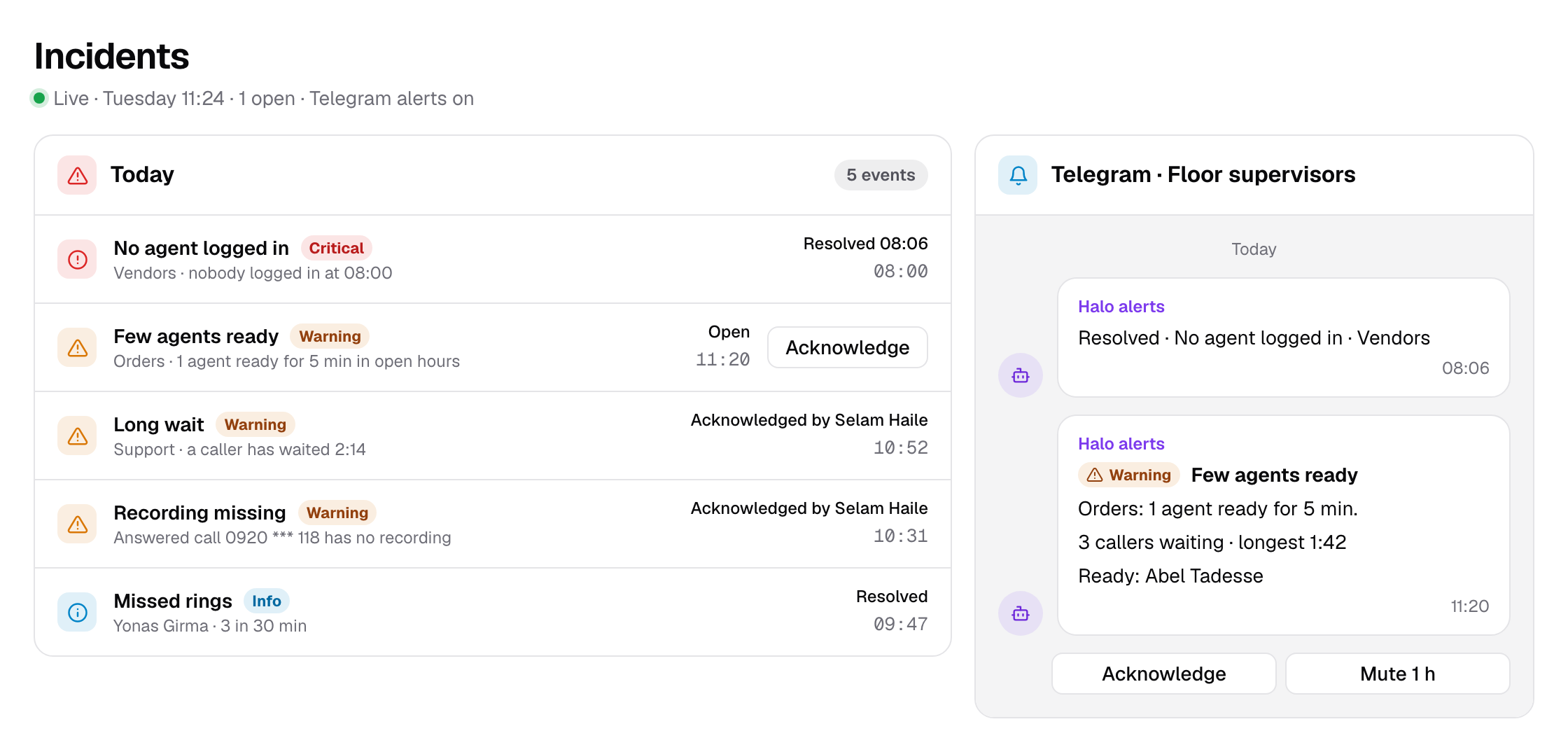
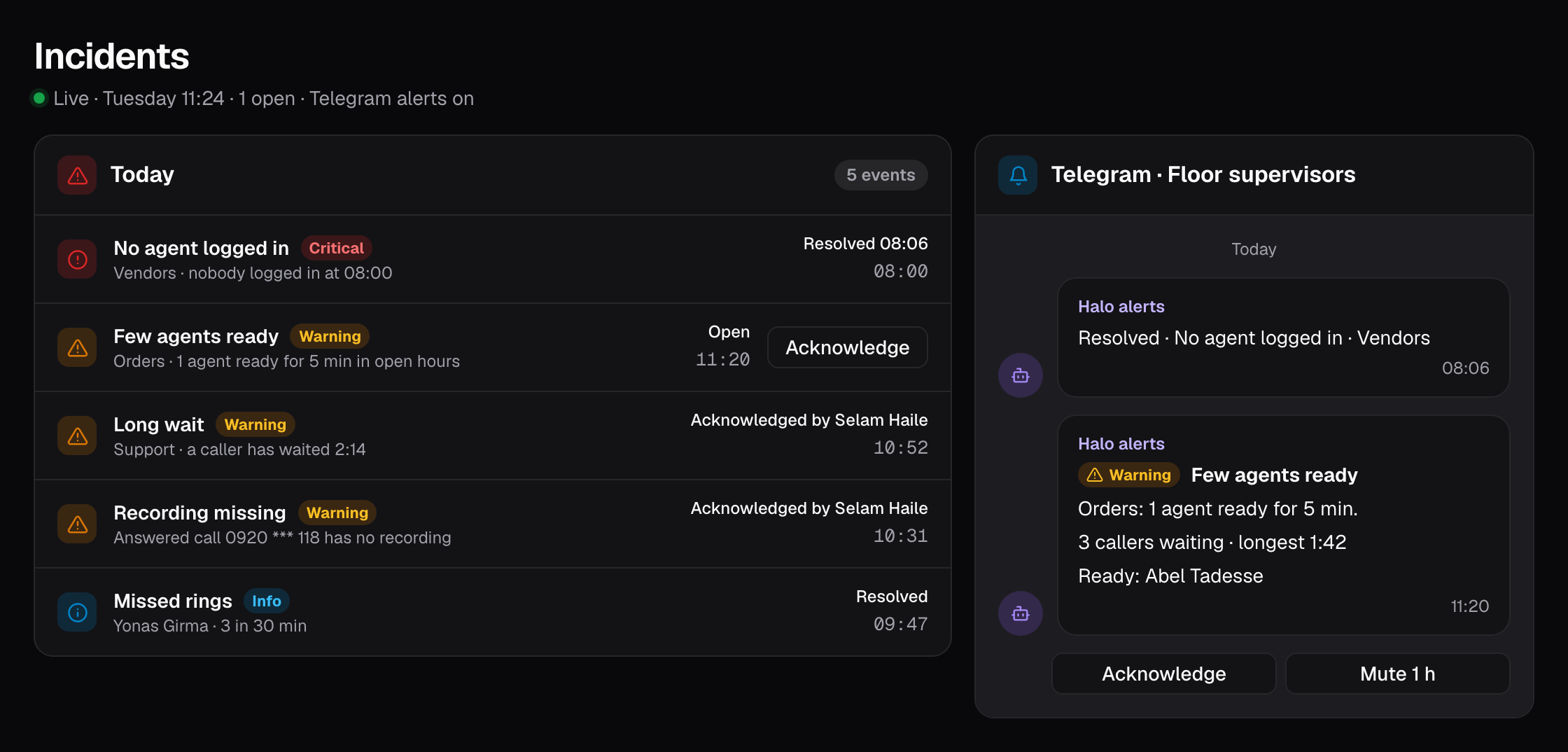
When fewer than 2 agents are ready in a queue for 5 minutes in open hours, supervisors get an alert. If no agent is logged in, the alert is critical.
How it works on a busy day
At 12:40, lunch orders come in faster than the “Orders” queue can answer. Hana Tesfaye, the fifth caller, hears that she is fifth in line and keeps waiting. A VIP vendor calls and is placed ahead of the waiting customers.
Two callers choose a callback. Their requests appear on the shared callback list. By 13:15 Dawit Bekele has called both back, and both tasks closed on their own.
Facts
- Position announcement
- On, every 60 seconds by default
- Default overflow
- Voicemail, after the maximum wait
- VIP callers
- Placed ahead in the queue
- Callback offer
- Becomes a task on the shared list
- Queue sounds
- Replaceable with your own recordings
Questions about call queues
Can callers hear their place in line in Amharic?
Yes. Halo’s built-in queue sounds can be replaced with your own recordings, so position and wait messages can be in Amharic. Your admin uploads the files once, and every queue that uses them plays them.
What happens when nobody answers for a long time?
After the maximum wait you set, the caller moves to the overflow, which is voicemail by default. A voicemail becomes a callback task on the shared list, so someone calls the customer back.
Can a caller ask to be called back instead of waiting?
Yes. A queue can offer a callback. The request becomes a task on the shared callback list and closes itself when the customer is reached.
Can supervisors see how long callers have been waiting?
Yes. The wallboard shows each queue’s callers waiting and the longest wait, along with the service level and a card for every agent. Changes show on the wallboard within 2 seconds, so supervisors can move people before a queue backs up.
Related features
Where this matters most: Delivery and logistics. See how Halo is priced on the pricing page.