Call center software for delivery companies
Delivery companies live on the phone at lunch, when orders, riders and vendors all call at once. Halo is call center software for delivery companies: callers hear their place in line, missed calls become callback tasks and reminders go out as automatic calls.


Used by klik, the Addis Ababa delivery company.
Delivery companies
Three call problems delivery companies know
Order calls at lunch peaks
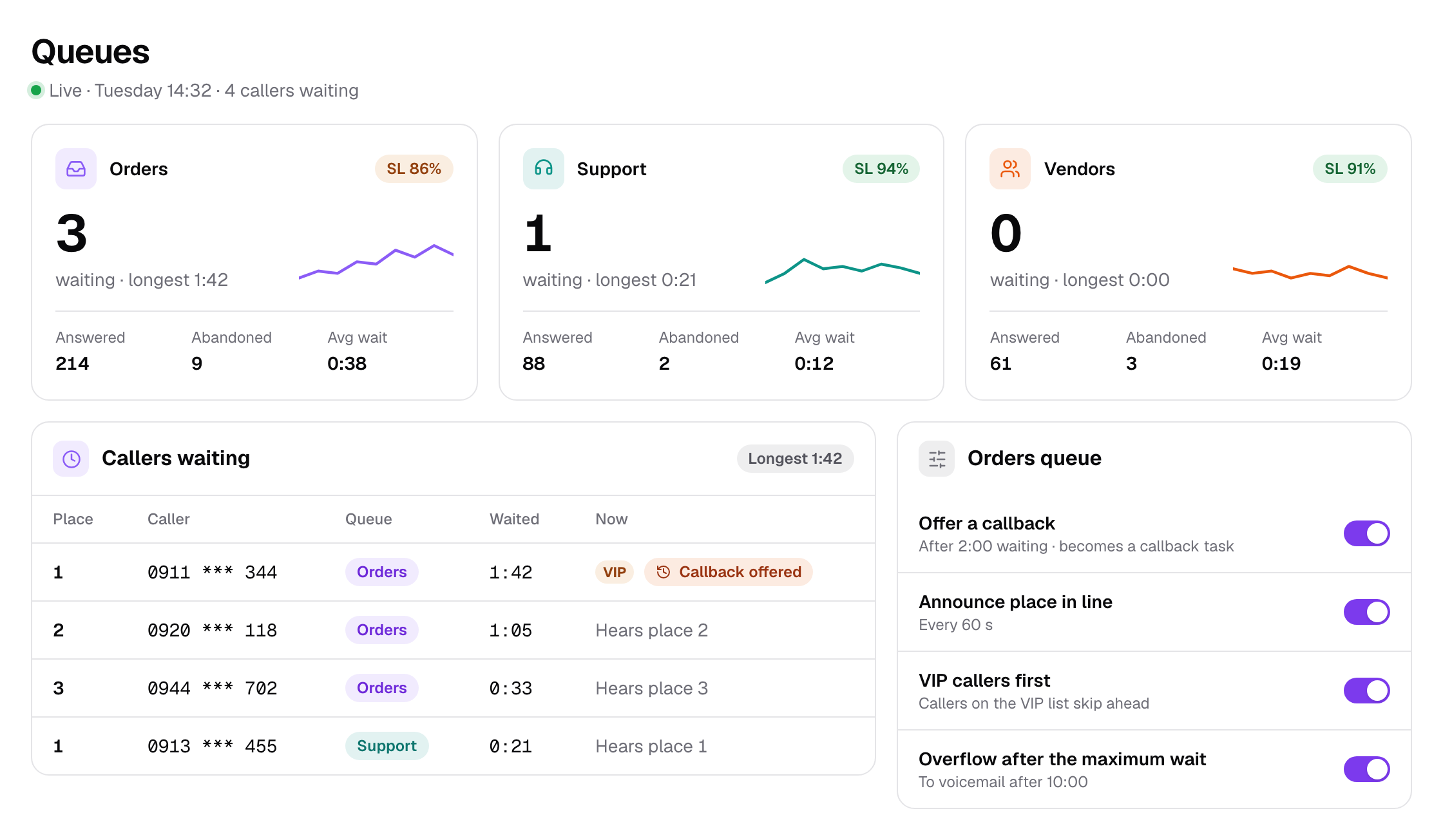
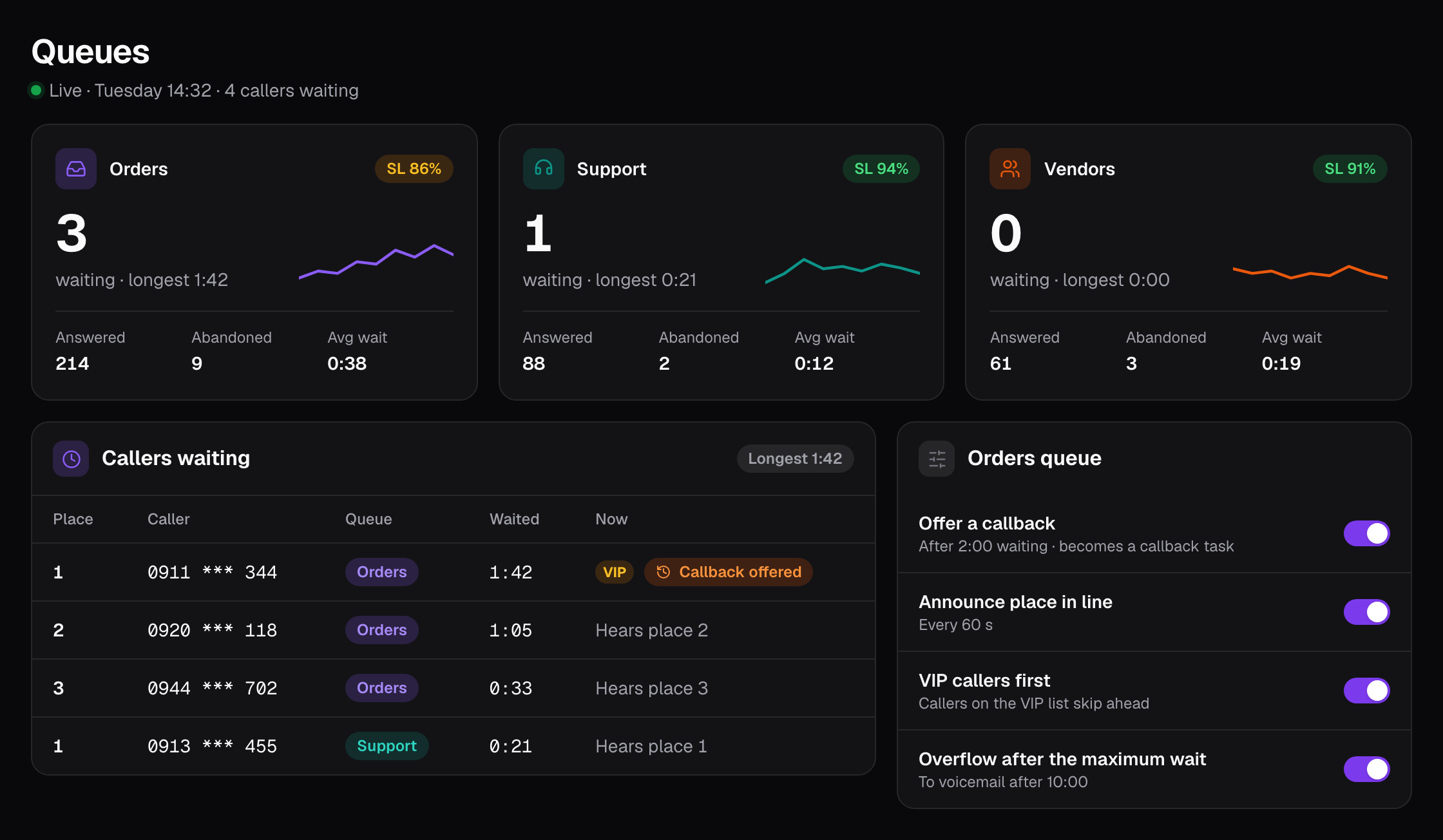
Around lunch, more customers call to order than your agents can answer at once. A caller who waits in silence often hangs up.
Riders and customers on the same order
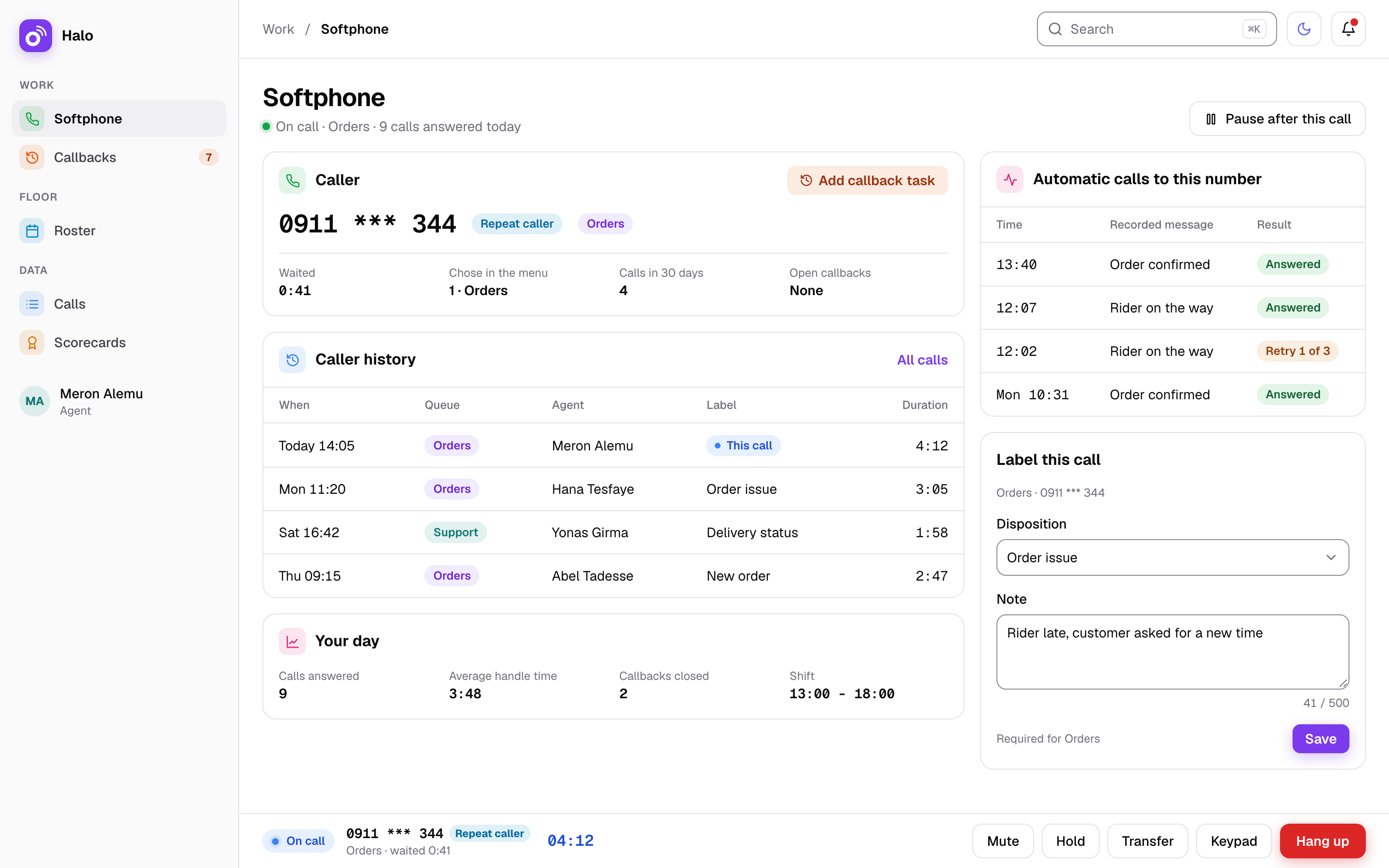
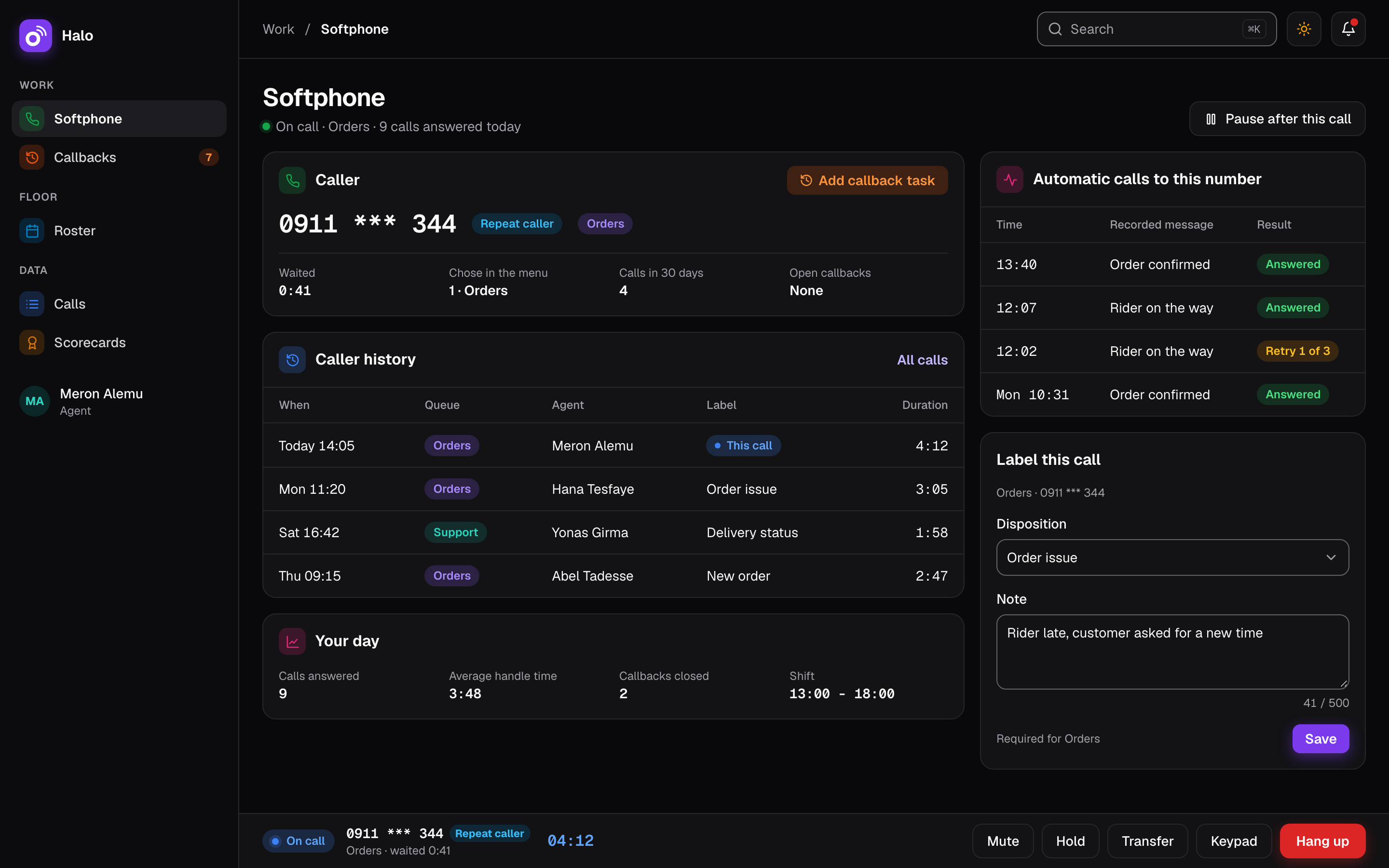
A rider at the gate and a customer asking where the food is can both be calling about one order. Each call needs to reach the right agent quickly.
Reminder calls
Vendors and customers need reminders about pickups and deliveries. Making those calls by hand takes agents away from the queue.
Call center software for delivery companies
How Halo answers them
Queues that keep lunch callers informed
Callers hear their place in line, every 60 seconds by default, with hold music in between. VIP callers go first, and a busy queue can offer a callback.
Call queuesMissed calls become callback tasks
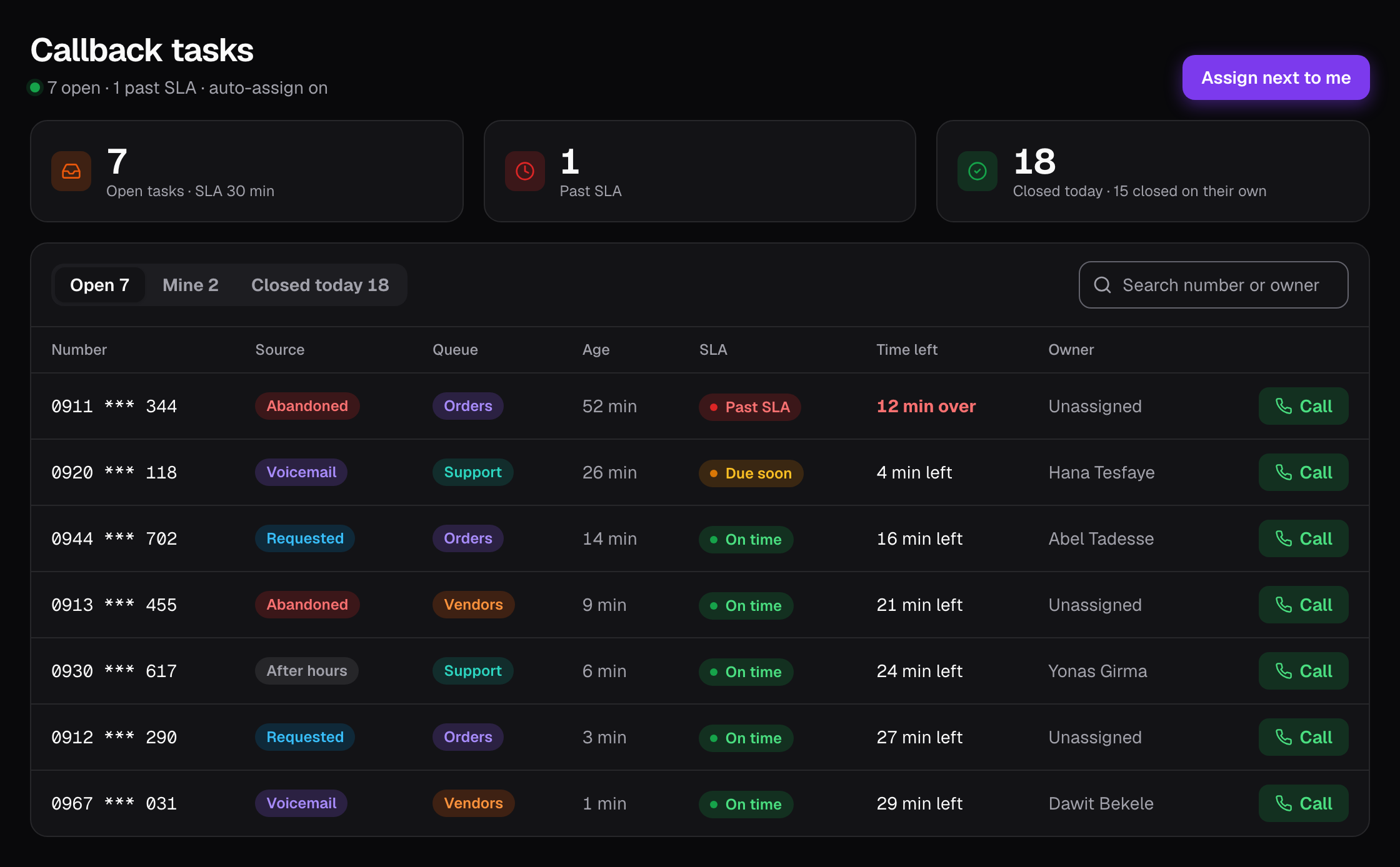
Callers who hang up while waiting, voicemails and callback requests land on one shared list. A task closes itself when the customer is reached.
Missed call callbacks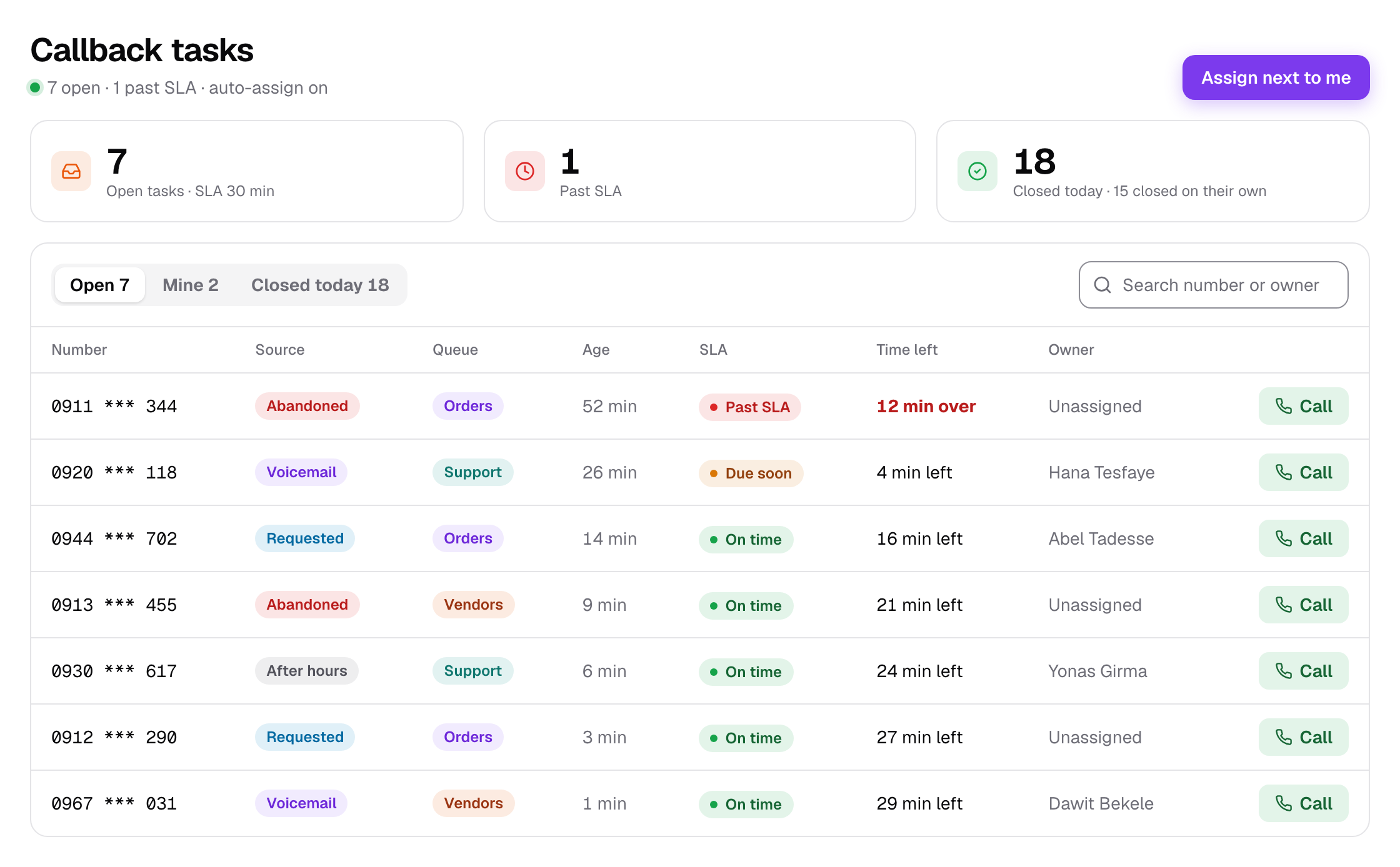
Automatic reminder calls with a recorded message
Your order system places automatic reminder calls with a recorded message through the Callout API, with retries, allowed hours and duplicate protection. The calls play a recording; callers do not press keys.
Automatic callsSeparate lines for riders, customers and vendors
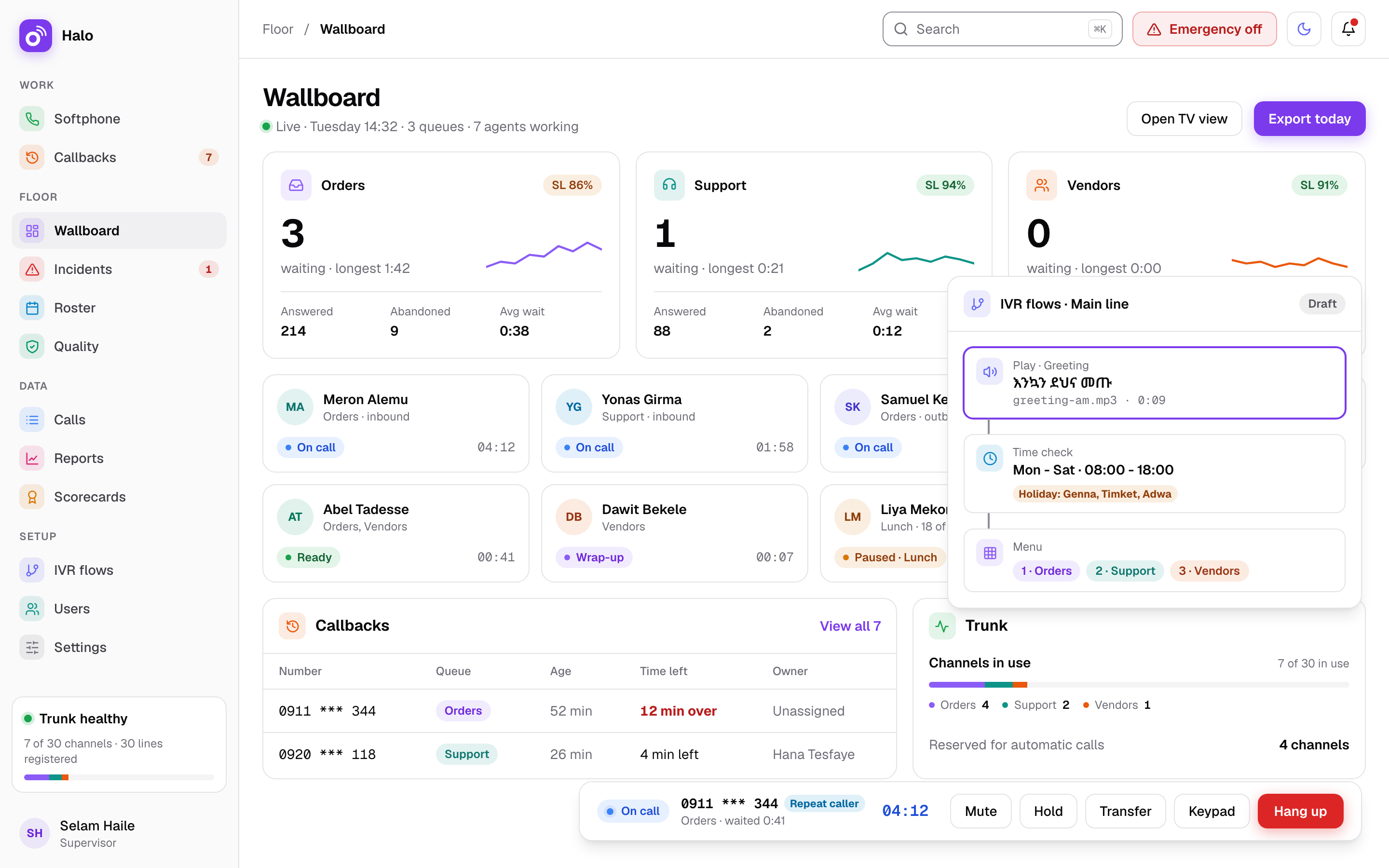
The voice menu sends each kind of caller to its own queue. Agents pass a call on with a blind or attended transfer. Voice menus
Automatic calls never block agents
A channel reservation on your Ethio Telecom SIP trunk keeps lines free for agents while reminder calls go out. Ethio Telecom SIP
See the lunch peak live
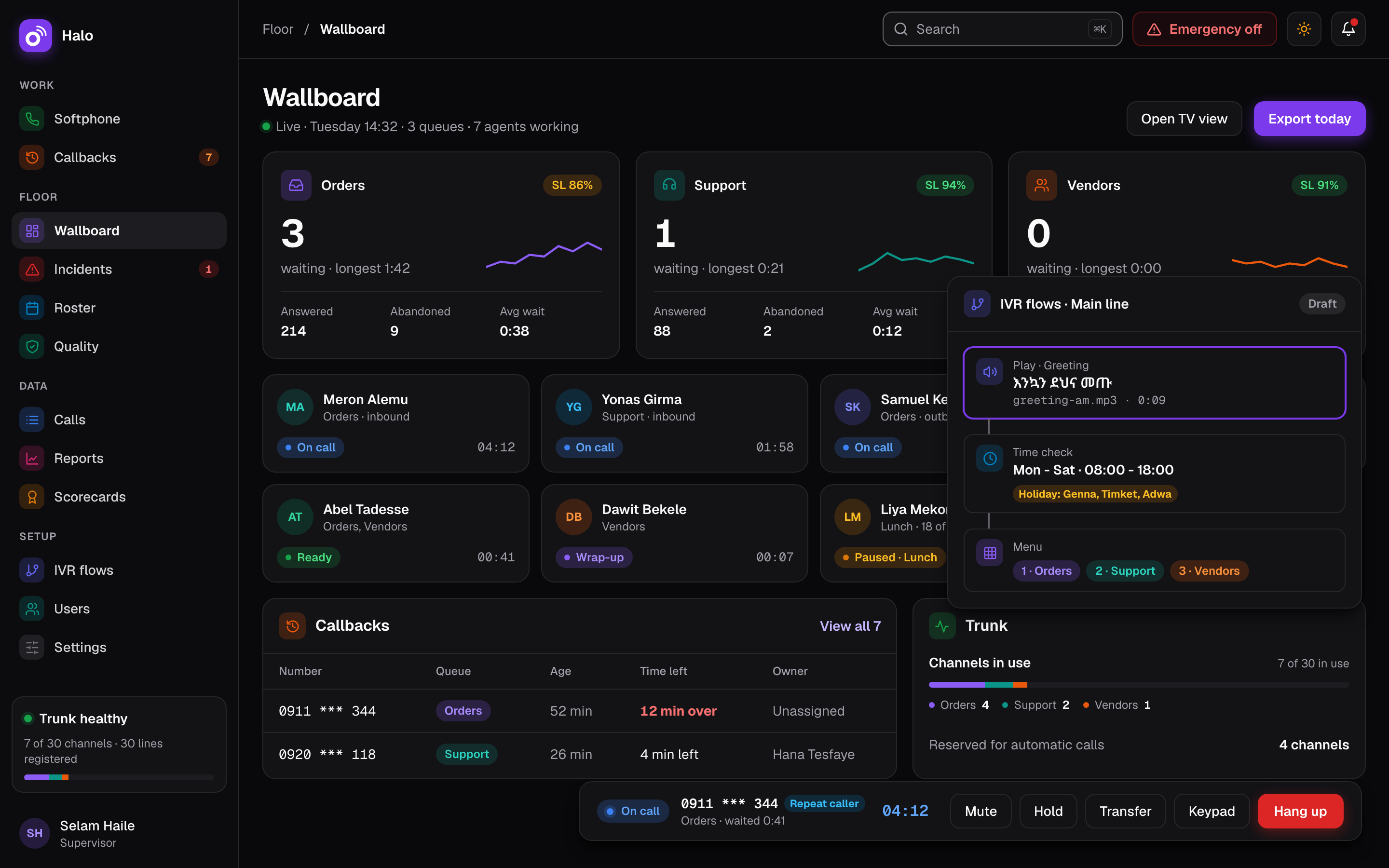
The wallboard shows callers waiting, the longest wait, service level and one card per agent. Changes show within 2 seconds. Live wallboard
Every 60 seconds
Position announcement
- Within 2 seconds
- Wallboard updates
- Up to 100
- agents
- 4 vCPU, 8 GB
- the starting server
A sample day
Lunch on the Orders queue
At 11:30 Selam Haile, the supervisor, opens the wallboard on the office TV through its TV mode link. The “Orders” queue is quiet, and every agent’s card shows them ready.
At 11:50 the queue starts to fill. Selam sees six callers waiting and the longest wait passing two minutes, so she asks Yonas Girma to come back from his break early. Each waiting caller hears their place in line, and a VIP vendor is placed ahead of the others.
At 12:05 Abel Tadesse, a rider, calls from a customer’s gate. He picks the rider option in the voice menu and reaches the “Support” queue. Liya Mekonnen answers, checks with the agent who took the order, and passes the call over with an attended transfer.
At 12:20 Meron Alemu hangs up after waiting. Her call becomes a callback task. At 12:45 Dawit Bekele calls her back, and the task closes on its own.
At 12:30 fewer than 2 agents have been ready on the “Support” queue for 5 minutes. Selam gets a Telegram alert and asks Hana Tesfaye to finish her lunch early.
At 16:00 the order system places reminder calls with a recorded message to vendors about the evening pickups, while lines stay free for agents.
What to look for in call center software for delivery companies
Look for software that keeps waiting callers informed, turns every missed call into a task someone owns, and keeps automatic calls out of your agents’ way at lunch. Questions worth asking any supplier:
- How does a waiting caller learn their place in line, and can you record those messages yourself, in Amharic?
- What happens to a caller who hangs up? A task with an owner is easier to act on than a number in a report.
- Can riders, customers and vendors reach different teams from one number?
- Can your order system place reminder calls on its own, and what stops those calls from taking every line at the peak?
- Who installs the system in Ethiopia, and who answers when something goes wrong?
The sections above show how Halo answers each of these.
Skynet VISP
How Halo is set up for delivery companies
Skynet VISP installs Halo for you and supports it after go-live. Setup covers four things.
- A server for your company.Your own server or one from Skynet. It starts at 4 vCPU, 8 GB RAM and a 500 GB SSD on Debian 13, and Skynet sizes larger teams.
- Your Ethio Telecom SIP line.Connected and tested over a private link from Ethio Telecom, with a channel reservation so automatic calls never block agents.
- Your first menu and queues.The first voice menu, queues such as “Orders”, “Support” and “Vendors”, your users and your hours.
- Training and support.Hands-on training in Addis Ababa. The yearly licence includes updates and support Mon-Sat 08:00-18:00 by phone, Telegram and email.
Facts
- Position announcement
- Every 60 seconds by default
- Missed calls and voicemails
- Become callback tasks that close when the customer is reached
- Reminder calls
- Automatic calls with a recorded message, with retries and allowed hours
- Key presses in automatic calls
- Not in v1
- Lines for agents
- A channel reservation so automatic calls never block agents
- Wallboard
- Callers waiting, longest wait, service level, one card per agent
- Wallboard updates
- Within 2 seconds
Questions from delivery companies
Can our order system call customers automatically?
Yes. Through the Callout API, your order system places automatic calls that play a recorded message, with per-key limits, retries, allowed hours, signed webhooks and duplicate protection. In v1 callers cannot press keys and the message has no dynamic content, so each call plays the recording you choose for that kind of reminder.
Will reminder calls take lines away from agents at lunch?
No. Halo keeps a channel reservation on your Ethio Telecom SIP trunk so automatic calls never block agents. Reminder calls also go out only in the allowed hours you set, and duplicate protection guards against the same call going out twice.
Can rider calls go ahead of customer calls?
Yes. The voice menu can send riders to their own queue, so they do not wait behind customers. A VIP check in the menu and VIP handling in the queue put callers you mark as VIP ahead of the others when a queue is busy.
Does Halo fit a team of our size?
Halo is built for teams of up to 100 agents. The starting server has 4 vCPU, 8 GB RAM and a 500 GB SSD on Debian 13, and Skynet sizes the server for larger teams. You pay per seat per year, so the licence follows the number of people with a softphone.